
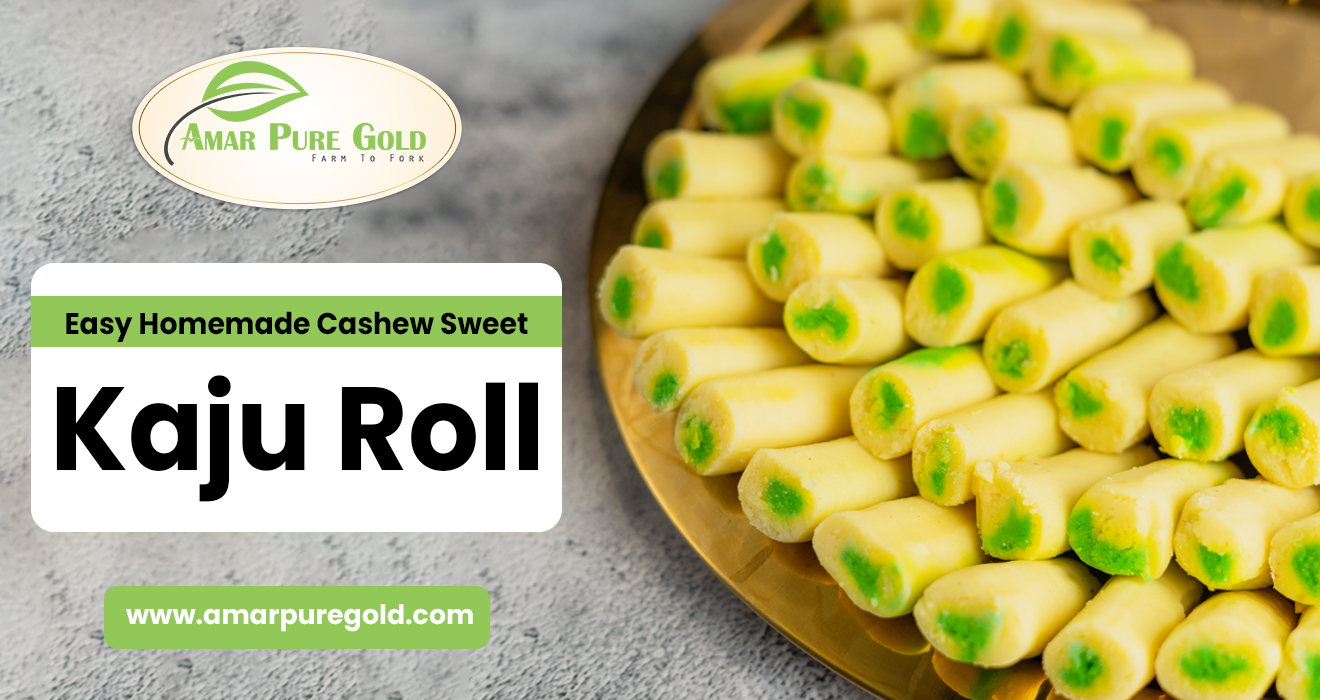
Kaju Roll is one of the most loved Indian sweets made with cashew nuts, sugar, ghee, and a rich filling of dry fruits or saffron-flavored paste. It is soft, smooth, mildly sweet, and beautifully shaped like a roll, making it perfect for festivals, weddings, celebrations, and gifting. If you love Kaju Katli, you will definitely enjoy Kaju Roll because both sweets are made with cashew powder, but Kaju Rolls has an attractive cylindrical shape and often comes with a delicious filling inside.
The best part about this sweet is that it can be prepared at home with simple ingredients. You do not need any special machine or professional mithai-making skills. With the right measurements and a few important tips, you can make market-style Kaju Rolls in your own kitchen in minutes.
What Is Kaju Roll?
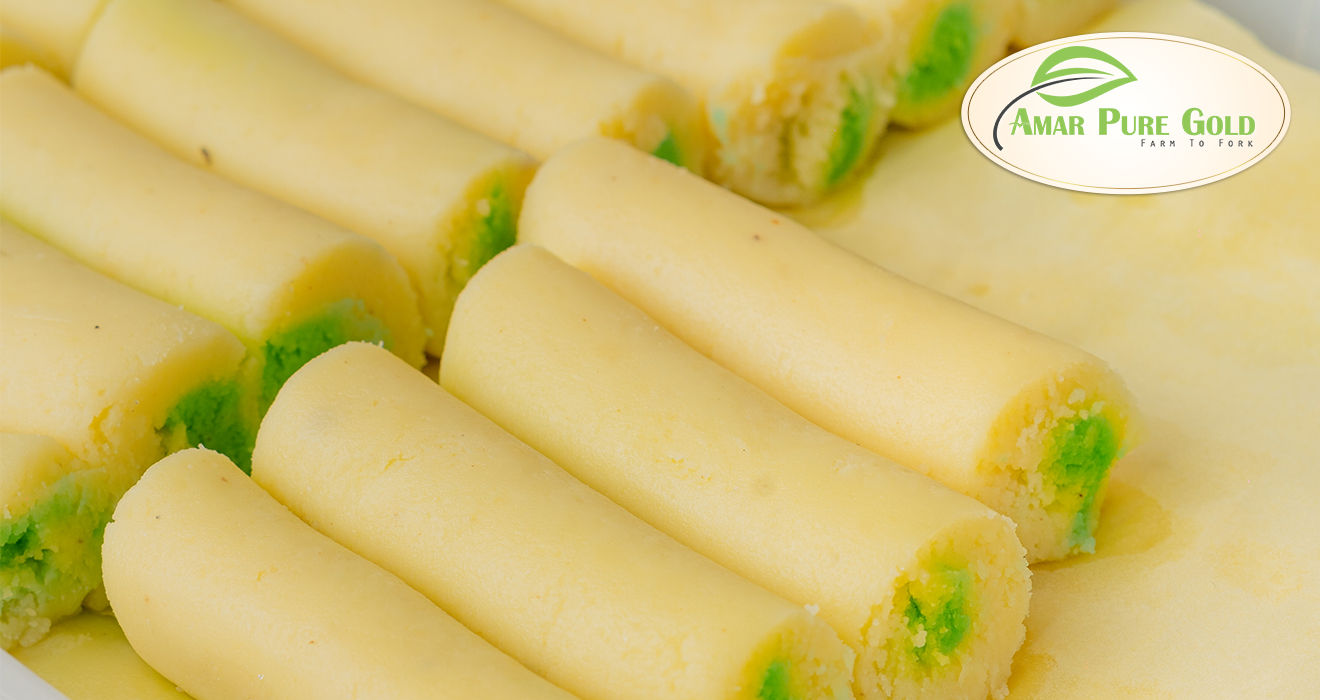
Kaju Roll is a traditional Indian cashew sweet made by preparing a smooth dough from cashew powder and sugar syrup. The dough is rolled flat, filled with a flavored stuffing, and then shaped into long rolls. These rolls are later cut into small pieces. The outer layer is usually white or cream-colored due to cashews, while the inside filling may be green, yellow, orange, or brown depending on the ingredients used.
The most common filling is made with pistachios, almonds, saffron, cardamom, or mawa. Some versions also use rose flavor, coconut, chocolate, or dates. Kaju Roll is especially popular during Diwali, Raksha Bandhan, Holi, weddings, and family functions.
Why You Will Love This Kaju Roll Recipe
This homemade Kaju Roll recipe is easy, quick, and tastes just like the sweet shop version. It uses basic pantry ingredients and does not require too much cooking. The texture is soft and melt-in-the-mouth, while the filling adds a rich and nutty taste.
Homemade Kaju Rolls are also better because you can control the sweetness, use pure ingredients, and avoid artificial colors or preservatives. You can prepare them fresh and serve them to guests or pack them beautifully for gifting.
Ingredients for Kaju Roll
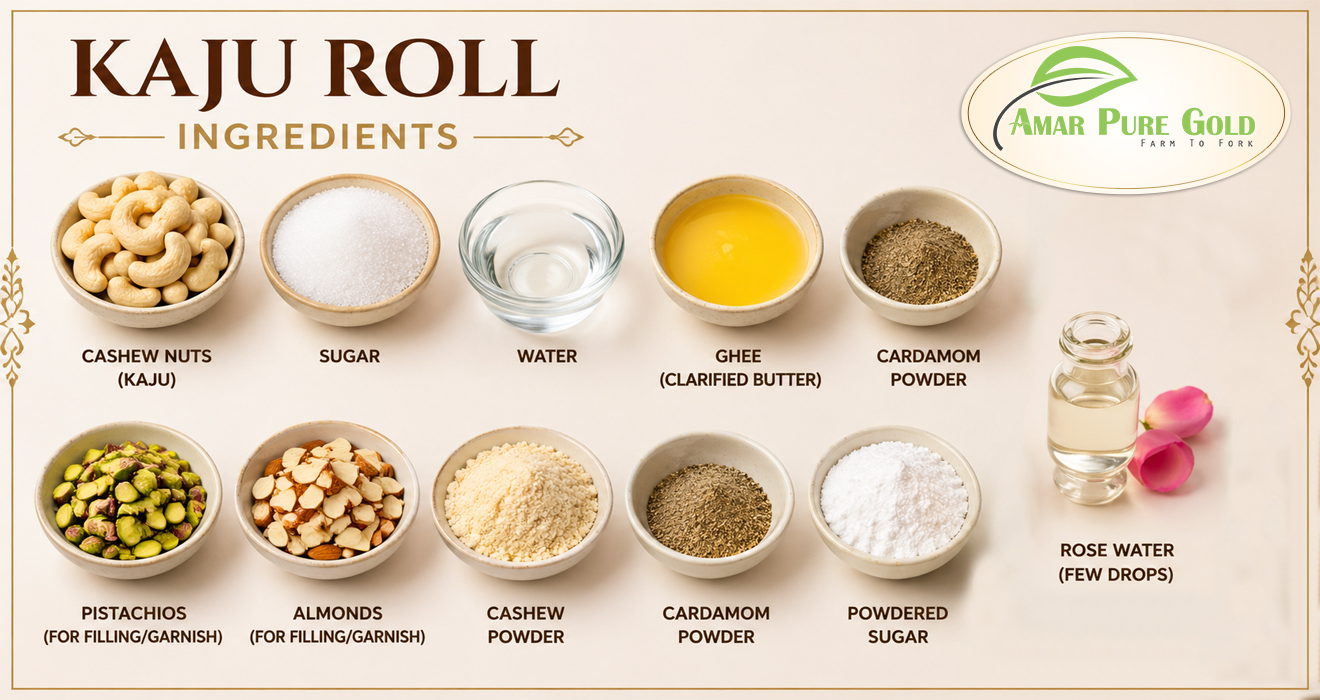
For the outer cashew layer:
- 1 cup cashew nuts
- ½ cup sugar
- ¼ cup water
- 1 teaspoon ghee
- ¼ teaspoon cardamom powder
- Few drops rose water, optional
For the filling:
- ¼ cup pistachios
- 2 tablespoons almonds
- 1 tablespoon cashew powder
- 1 tablespoon powdered sugar
- ¼ teaspoon cardamom powder
- 1 teaspoon ghee
- Few saffron strands soaked in 1 teaspoon warm milk, optional
- A few drops green food color, optional
For garnish:
- Silver vark, optional
- Chopped pistachios
- Saffron strands
How to Make Cashew Powder
The most important step in making the perfect Kaju Roll is preparing fine cashew powder. Take fresh cashews and grind them in a mixer using short pulses. Do not grind continuously because cashews release oil quickly and may turn into paste. Pulse for a few seconds, stop, mix, and pulse again.
After grinding, sieve the powder to remove coarse pieces. If any large bits remain, grind them again lightly. Fine cashew powder gives a smooth and soft texture to the sweet.
Use room-temperature cashews. If cashews are refrigerated, keep them outside for some time before grinding. Cold cashews may become sticky while grinding.
Step-by-Step Kaju Roll Recipe
Step 1: Prepare the filling
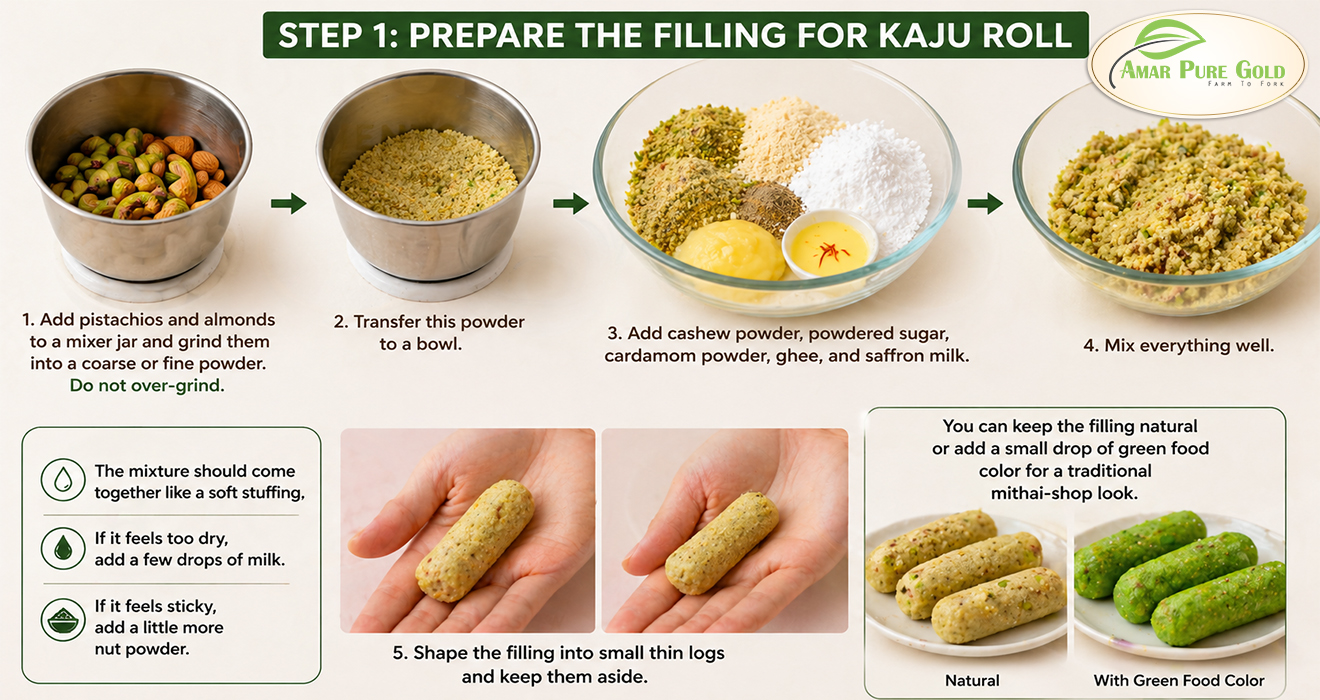
Add pistachios and almonds to a mixer jar and grind them into a coarse or fine powder. Do not over-grind. Transfer this powder to a bowl. Add cashew powder, powdered sugar, cardamom powder, ghee, and saffron milk. Mix everything well.
The mixture should come together like a soft stuffing. If it feels too dry, add a few drops of milk. If it feels sticky, add a little more nut powder. Shape the filling into small thin logs and keep them aside.
You can keep the filling natural or add a small drop of green food color for a traditional mithai-shop look.
Step 2: Make sugar syrup
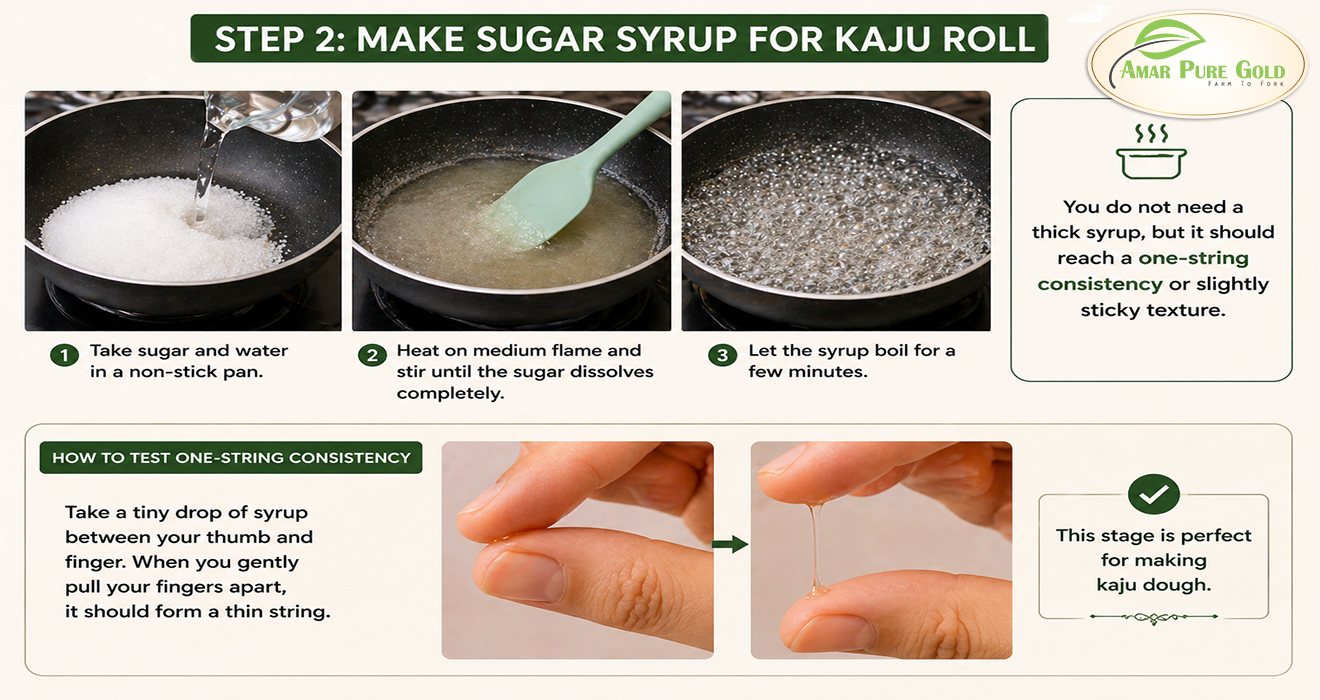
Take sugar and water in a non-stick pan. Heat on medium flame and stir until the sugar dissolves completely. Let the syrup boil for a few minutes. You do not need a thick syrup, but it should reach a one-string consistency or slightly sticky texture.
To test, take a tiny drop of syrup between your thumb and finger. When you gently pull your fingers apart, it should form a thin string. This stage is perfect for making kaju dough.
Step 3: Add cashew powder
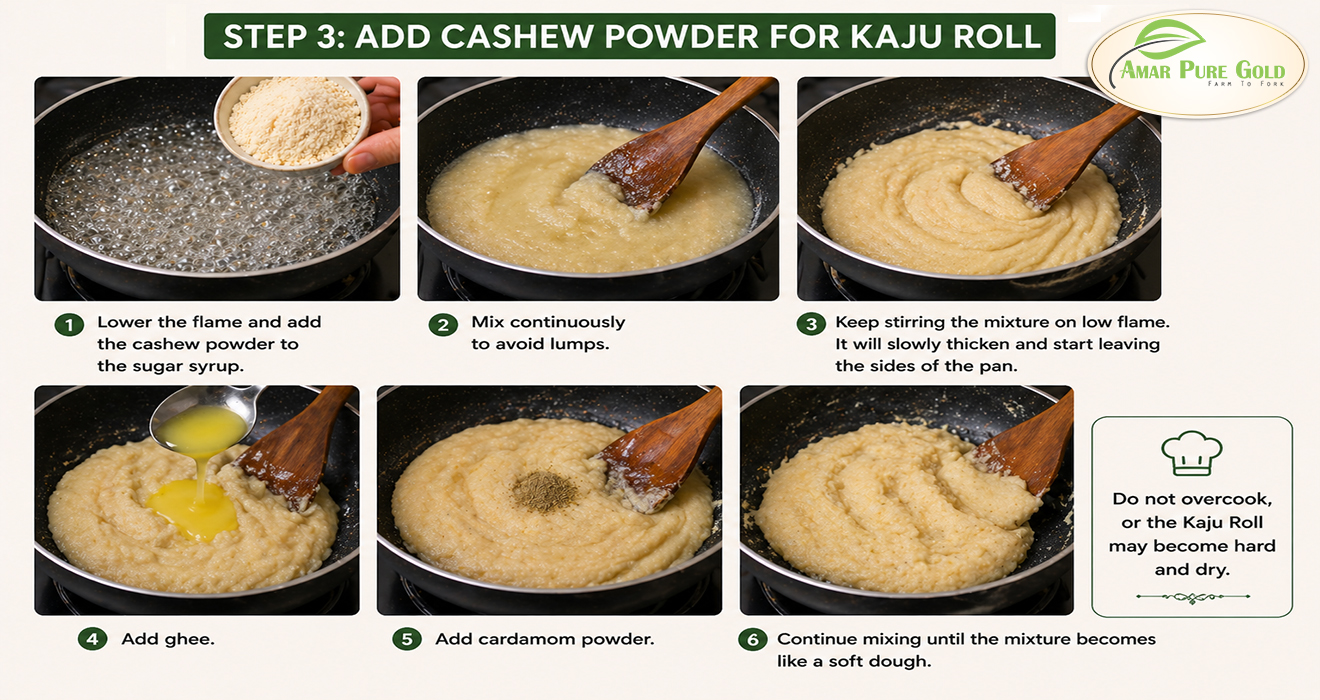
Lower the flame and add the cashew powder to the sugar syrup. Mix continuously to avoid lumps. Keep stirring the mixture on low flame. It will slowly thicken and start leaving the sides of the pan.
Add ghee and cardamom powder. Continue mixing until the mixture becomes like a soft dough. Do not overcook, or the Kaju Roll may become hard and dry.
Step 4: Knead the dough
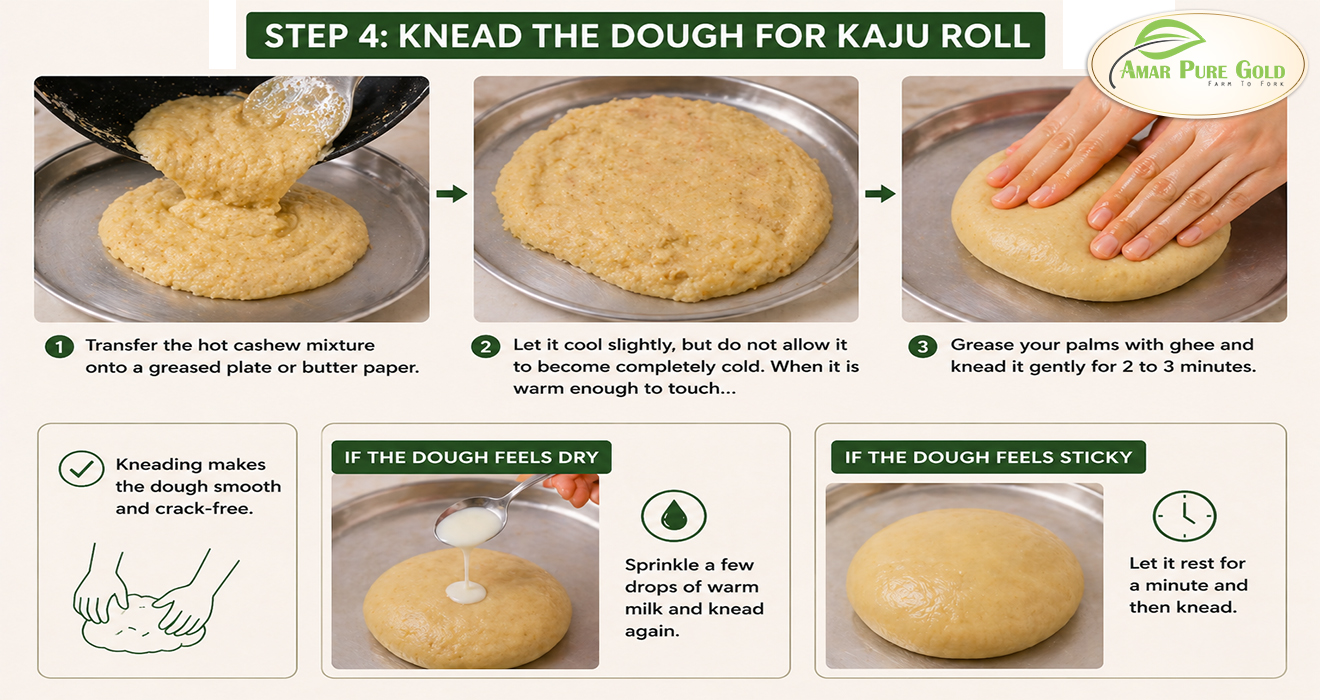
Transfer the hot cashew mixture onto a greased plate or butter paper. Let it cool slightly, but do not allow it to become completely cold. When it is warm enough to touch, grease your palms with ghee and knead it gently for 2 to 3 minutes.
Kneading makes the dough smooth and crack-free. If the dough feels dry, sprinkle a few drops of warm milk and knead again. If it feels sticky, let it rest for a minute and then knead.
Step 5: Roll the cashew dough
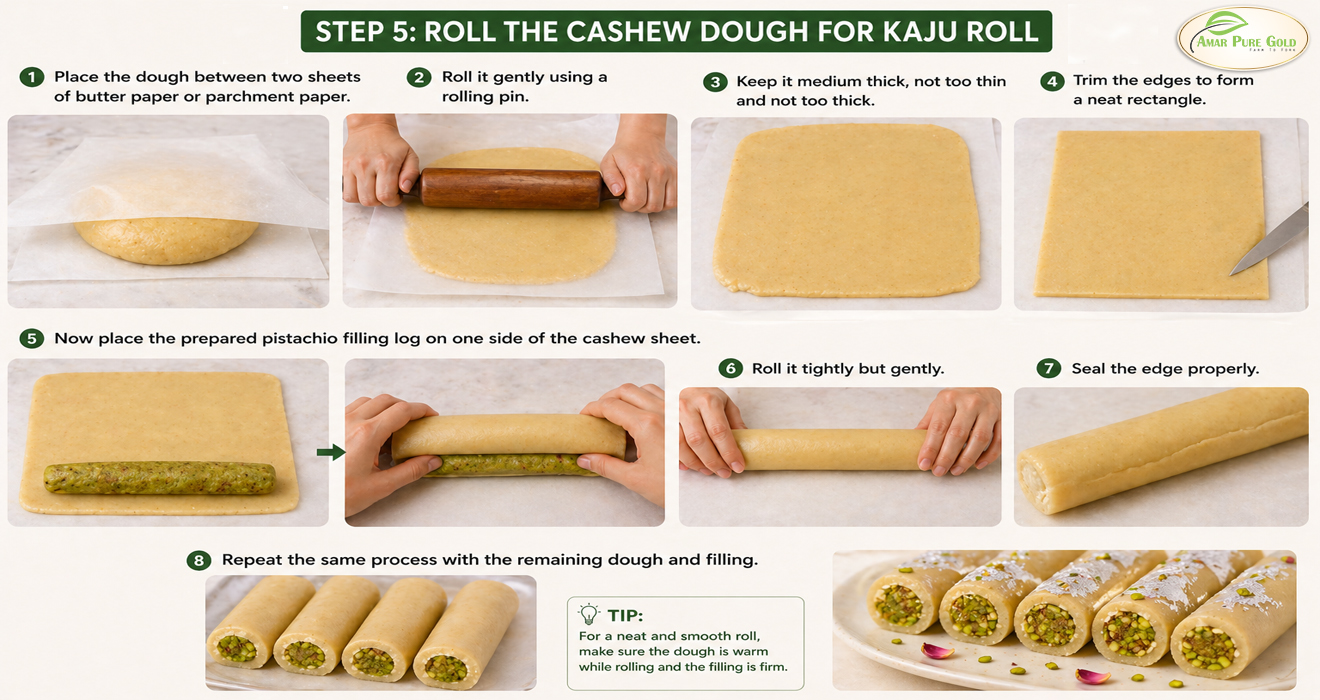
Place the dough between two sheets of butter paper or parchment paper. Roll it gently using a rolling pin. Keep it medium thick, not too thin and not too thick. Trim the edges to form a neat rectangle.
Now place the prepared pistachio filling log on one side of the cashew sheet. Roll it tightly but gently. Seal the edge properly. Repeat the same process with the remaining dough and filling.
Step 6: Cut and garnish
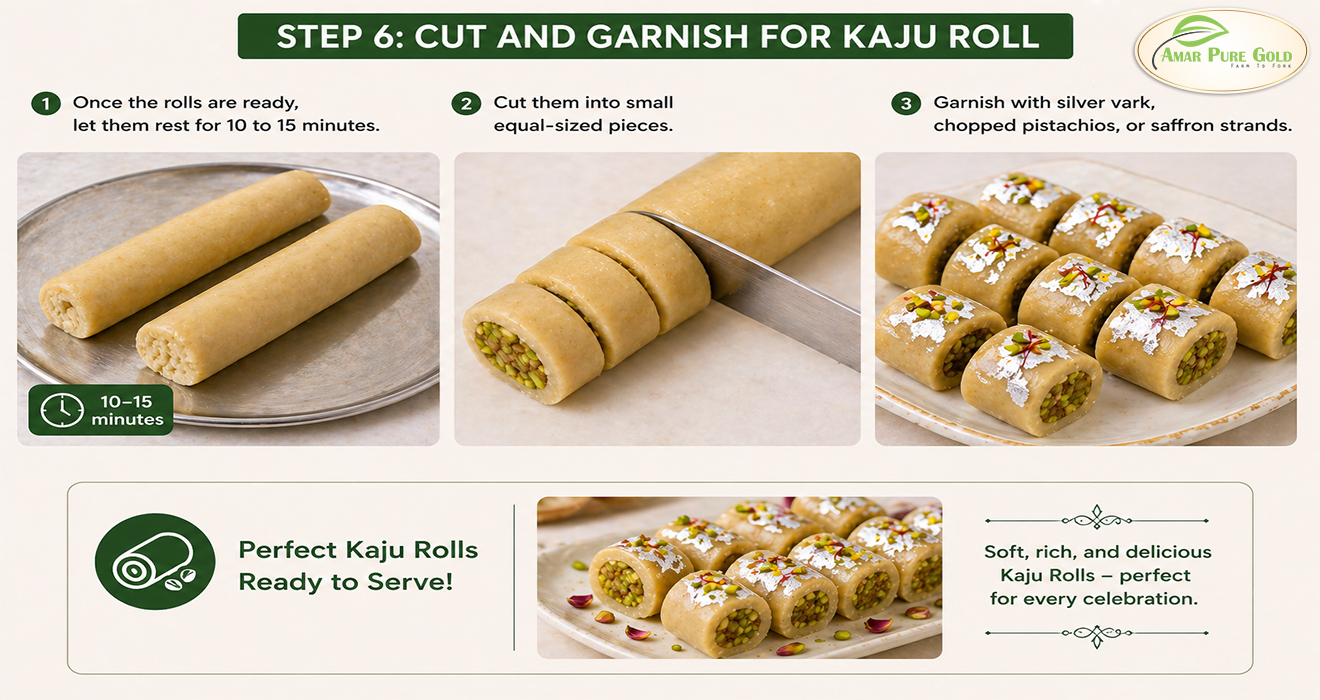
Once the rolls are ready, let them rest for 10 to 15 minutes. Cut them into small equal-sized pieces. Garnish with silver vark, chopped pistachios, or saffron strands.
Your homemade Kaju Rolls are ready to serve.
Tips to Make Perfect Kaju Roll
Always use good-quality cashews. Old or oily cashews can affect the taste and texture. Grind cashews carefully using pulse mode only. Over-grinding will make them oily and sticky.
Sugar syrup consistency is very important. If the syrup is too thin, the dough will be sticky. If it is too thick, the dough may become hard. One-string consistency works best.
Do not overcook the cashew mixture. Once it starts leaving the pan and forms a soft mass, remove it from heat. Overcooking is the main reason for dry or cracked Kaju Rolls.
Knead the dough while it is still warm. Warm dough becomes smooth easily. If the dough cools completely, it becomes difficult to roll.
Use butter paper to roll the dough neatly. It prevents sticking and helps you get a smooth finish.
Common Mistakes to Avoid
One common mistake is grinding cashews for too long. This turns them into cashew paste instead of powder. Always pulse slowly.
Another mistake is adding too much water to the sugar syrup. This increases cooking time and may make the dough sticky. Use only the required amount of water.
Some people cook the cashew mixture on high flame. This can burn the mixture or make it uneven. Always cook on low to medium flame.
Cutting the rolls immediately after shaping can spoil their shape. Let them rest for a few minutes before slicing.
Variations of Kaju Roll
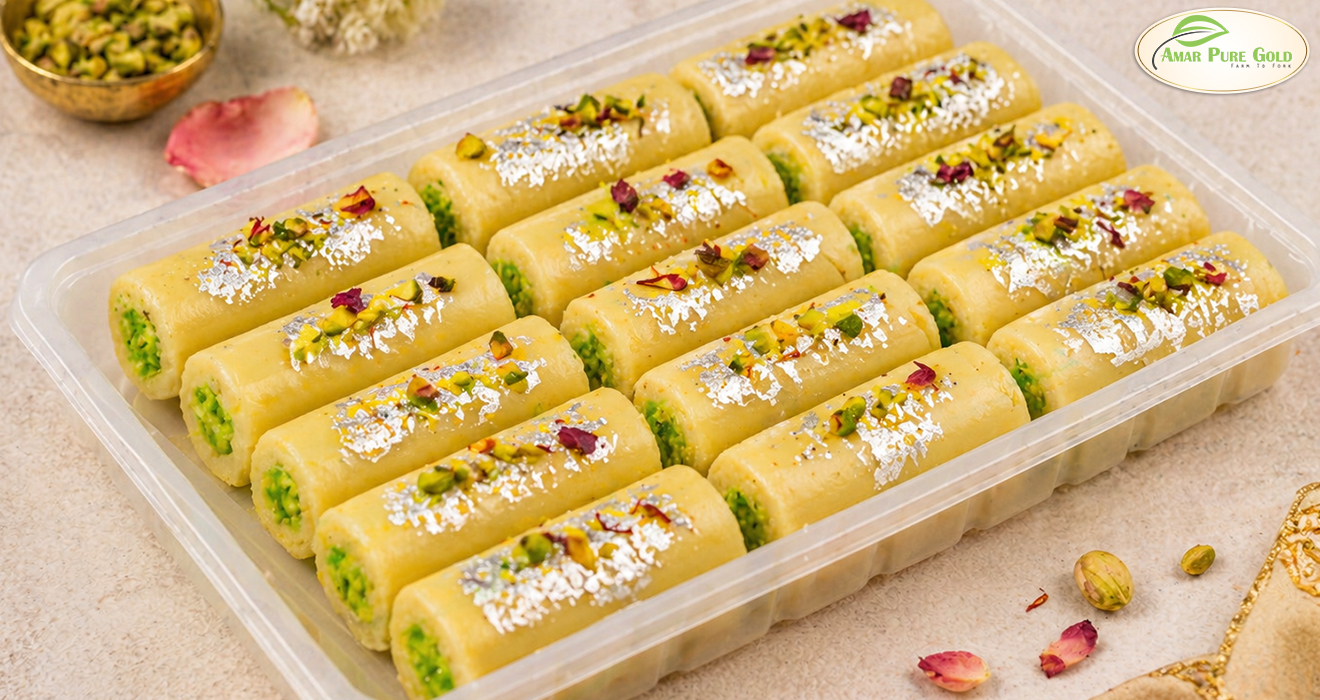
Kaju Roll can be made in many different flavors. For a classic version, use pistachio filling with cardamom. For a royal flavor, add saffron and rose water. For a richer version, use mawa or khoya filling.
You can also make chocolate Kaju Roll by adding cocoa powder to the filling. Coconut Kaju Roll is another tasty option where desiccated coconut is mixed with sugar and cardamom. Dates and nuts filling is a healthier version with natural sweetness.
For festive occasions, you can make colorful Kaju Rolls using natural colors like saffron, beetroot powder, or pistachio paste.
Serving Suggestions
Kaju Rolls taste best when served fresh. You can arrange them on a decorative plate during festivals or offer them as prasad. They also make a beautiful homemade gift. Pack them in a sweet box with butter paper and garnish with silver vark for a professional look.
Serve Kaju Rolls with other sweets like Kaju Katli, Besan Ladoo, Coconut Barfi, Gulab Jamun, or Rasmalai during celebrations. They also go well with tea or milk.
Storage Tips
Kaju Rolls can be stored in an airtight container at room temperature for 2 to 3 days if the weather is cool. If you have used milk, mawa, or fresh filling, refrigerate them and finish within 4 to 5 days.
Keep them away from moisture. Always use a clean, dry spoon or hand while serving. For longer storage, avoid adding too much milk to the dough or filling.
Before serving refrigerated Kaju Rolls, keep them at room temperature for 10 minutes so they become soft again.
Is Kaju Roll Healthy?
Kaju Roll is a rich sweet, so it should be enjoyed in moderation. Cashews contain healthy fats, protein, and minerals, while pistachios and almonds add more nutrition. However, the recipe also contains sugar and ghee, so it is best eaten occasionally.
For a lighter version, you can reduce the sugar slightly or use dates in the filling. Still, traditional Kaju Roll tastes best with sugar syrup because it gives the correct mithai texture.
Frequently Asked Questions
Conclusion
Kaju Roll is a beautiful and delicious Indian sweet that looks special but is simple to make at home. With cashew powder, sugar syrup, ghee, and a flavorful dry fruit filling, you can prepare soft and rich Kaju Rolls in just a short time. The key is to grind the cashews properly, cook the mixture carefully, and knead the dough while warm.
Whether you are making sweets for Diwali, Raksha Bandhan, a family gathering, or a homemade gift box, this easy Kaju Roll recipe is a perfect choice. It is elegant, tasty, festive, and loved by people of all ages. Once you try making it at home, you may never need to buy it from a sweet shop again.