
Motichoor laddu, often spelled as motichur laddu, is one of India’s most iconic traditional sweets. Known for its soft, melt-in-the-mouth texture and vibrant saffron-orange color, this delicacy holds a special place in Indian households, celebrations, and religious rituals. From weddings and festivals to temple offerings, motichoor laddu is not just a dessert—it is an emotion tied to joy, prosperity, and tradition.
The word motichoor literally translates to “crushed pearls,” referring to the tiny, delicate boondi (fried gram flour droplets) that come together to form this exquisite laddu. Its unique texture and rich flavor distinguish it from other types of laddus, making it a favorite across generations.
What is Motichoor Laddu?
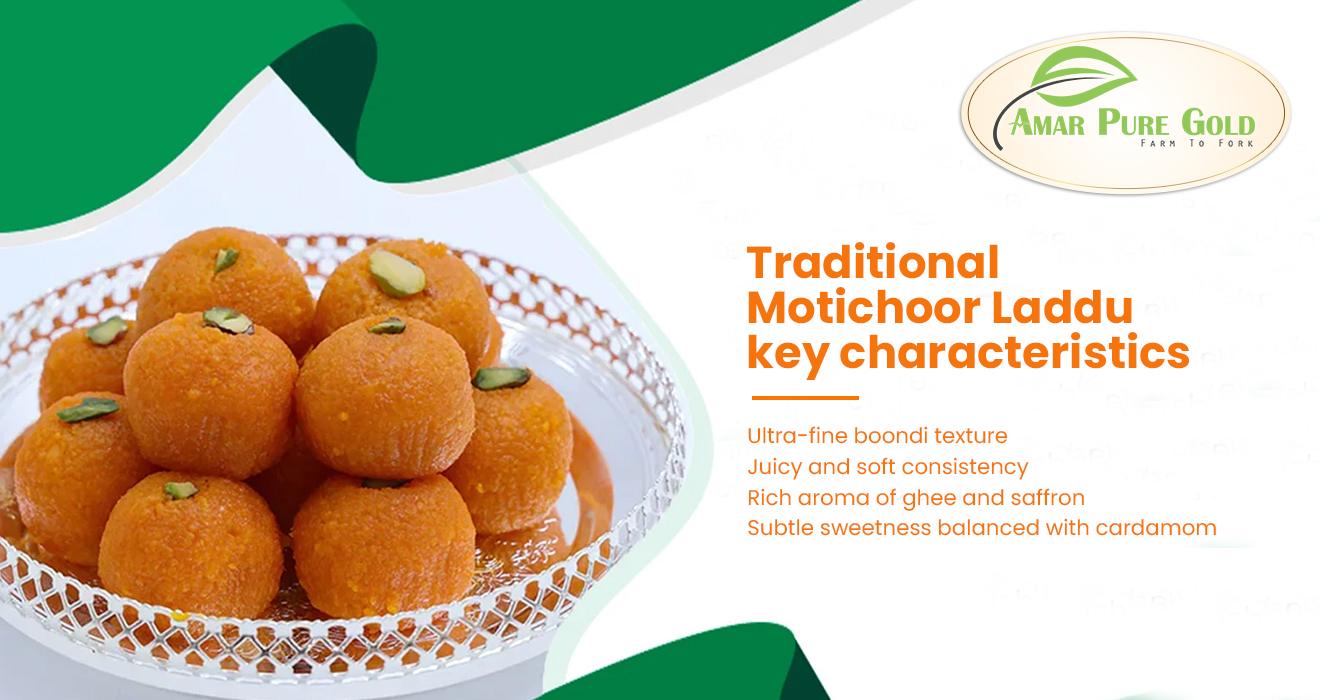
Motichoor laddu is a traditional Indian sweet made from finely fried boondi (tiny balls of gram flour batter), soaked in sugar syrup, and shaped into round laddus. Unlike regular boondi laddus, the boondi used here is extremely fine, giving it a smooth and soft consistency.
The key characteristics of motichoor laddu include:
- Ultra-fine boondi texture
- Juicy and soft consistency
- Rich aroma of ghee and saffron
- Subtle sweetness balanced with cardamom
This delicate preparation is what makes motichur laddu stand out among Indian sweets.
Ingredients Used in Motichoor Laddu
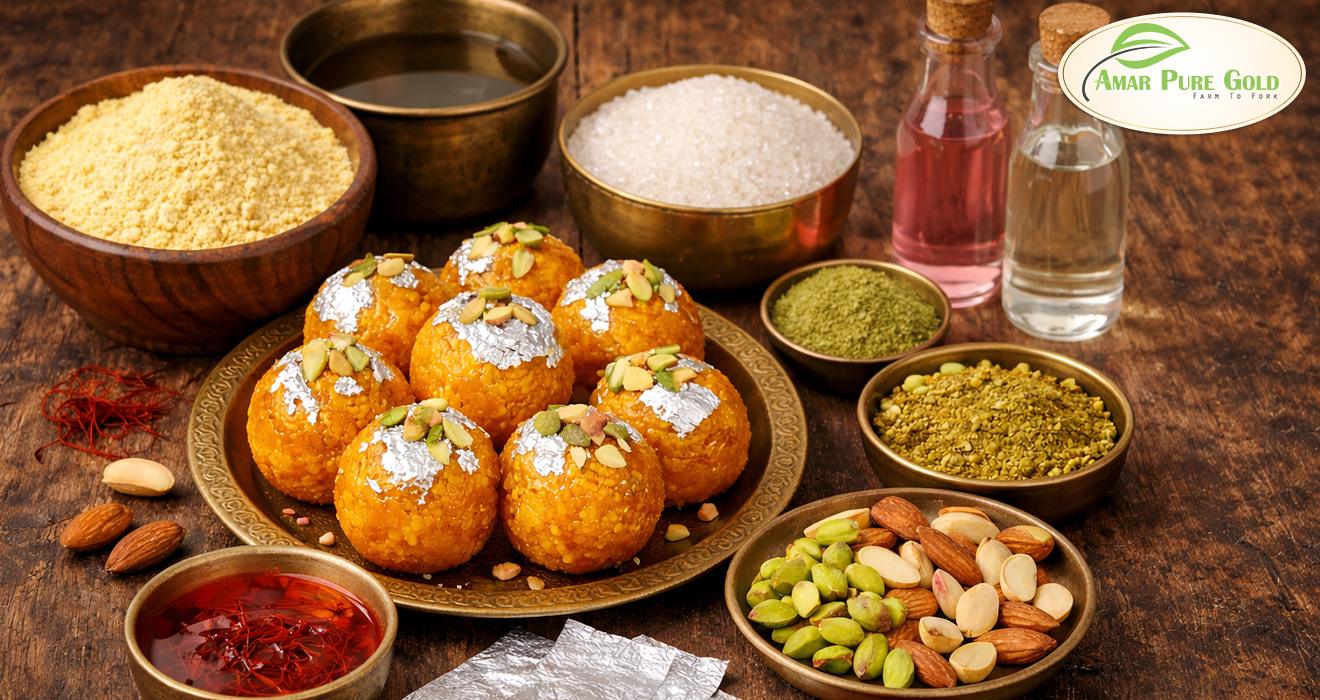
The beauty of motichoor laddu lies in its simplicity. It uses basic ingredients, yet the technique elevates it into a premium sweet.
Core Ingredients:
- Besan (gram flour) – the base for boondi
- Sugar – for syrup
- Ghee or oil – for frying
- Water – to prepare batter and syrup
Flavor Enhancers:
- Cardamom powder – adds aroma
- Saffron strands – for color and richness
- Rose water or kewra essence – for fragrance
Garnishing:
- Pistachios and almonds
- Silver varq (edible silver foil)
How Motichoor Laddu is Made
The preparation of motichoor laddu is a skill-driven process that requires precision and timing.
Step 1: Preparing the Batter
A smooth batter is made using besan and water. The consistency should be slightly thin so that tiny droplets can form.
Step 2: Frying the Boondi
The batter is poured through a special perforated ladle into hot ghee or oil, creating very fine boondi. These are fried lightly without making them crispy.
Step 3: Sugar Syrup Preparation
A one-string consistency sugar syrup is prepared and flavored with saffron and cardamom.
Step 4: Soaking
The freshly fried boondi is immediately soaked in warm sugar syrup so it absorbs sweetness and moisture.
Step 5: Shaping
Once the mixture cools slightly, it is gently pressed and shaped into round laddus by hand.
The result is a soft, juicy, and aromatic motichur laddu that melts effortlessly in the mouth.
Difference Between Motichoor Laddu and Boondi Laddu
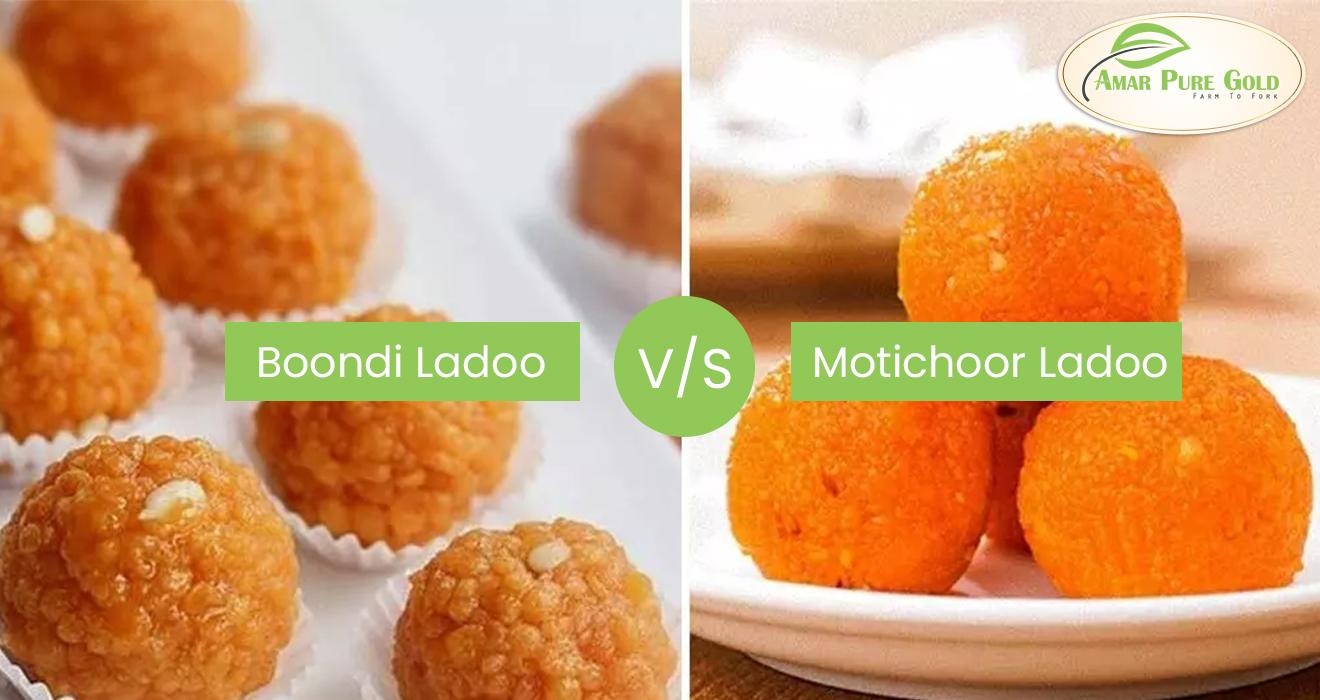
Many people confuse motichoor laddu with boondi laddu, but they are quite different.
| Feature | Motichoor Laddu | Boondi Laddu |
| Boondi Size | Very fine | Larger |
| Texture | Soft and smooth | Grainy |
| Appearance | Uniform and delicate | Rough and textured |
| Taste | Juicy and melt-in-mouth | Slightly crunchy |
Motichoor laddu is considered more refined and premium due to its intricate preparation.
Cultural and Religious Significance
Motichoor laddu holds deep cultural importance in India. It is widely used in:
Festivals
- Diwali – symbol of prosperity
- Ganesh Chaturthi – offered to Lord Ganesha
- Raksha Bandhan – shared among siblings
Religious Offerings
Motichur laddu is a popular prasad in temples across India, especially in North India. It is believed to bring blessings and positivity.
Weddings and Celebrations
No Indian wedding is complete without a box of motichoor laddus. It is often the first sweet distributed to guests, symbolizing happiness and new beginnings.
Nutritional Value of Motichoor Laddu
While motichoor laddu is a sweet indulgence, it also offers some nutritional benefits when consumed in moderation.
Nutritional Highlights:
- Provides quick energy due to sugar
- Contains protein from gram flour
- Rich in healthy fats if made with ghee
Approximate Values (per laddu):
- Calories: 150–200 kcal
- Carbohydrates: High
- Fat: Moderate
- Protein: Low to moderate
However, due to its sugar content, it should be consumed in limited quantities, especially by those managing weight or blood sugar levels.
Variations of Motichoor Laddu
Over time, several modern and regional variations of motichoor laddu have emerged.
Popular Variants:
- Dry Fruit Motichoor Laddu – loaded with nuts
- Chocolate Motichoor Laddu – fusion twist
- Low Sugar Laddu – healthier version
- Desi Ghee Laddu – richer taste
These variations cater to changing consumer preferences while retaining the essence of the traditional recipe.
Storage and Shelf Life
Motichoor laddu is best enjoyed fresh, but proper storage can extend its shelf life.
Storage Tips:
- Keep in an airtight container
- Store at room temperature for 2–3 days
- Refrigerate to extend freshness up to a week
Avoid exposure to moisture, as it can spoil the texture and taste.
Why Motichoor Laddu is Loved Worldwide
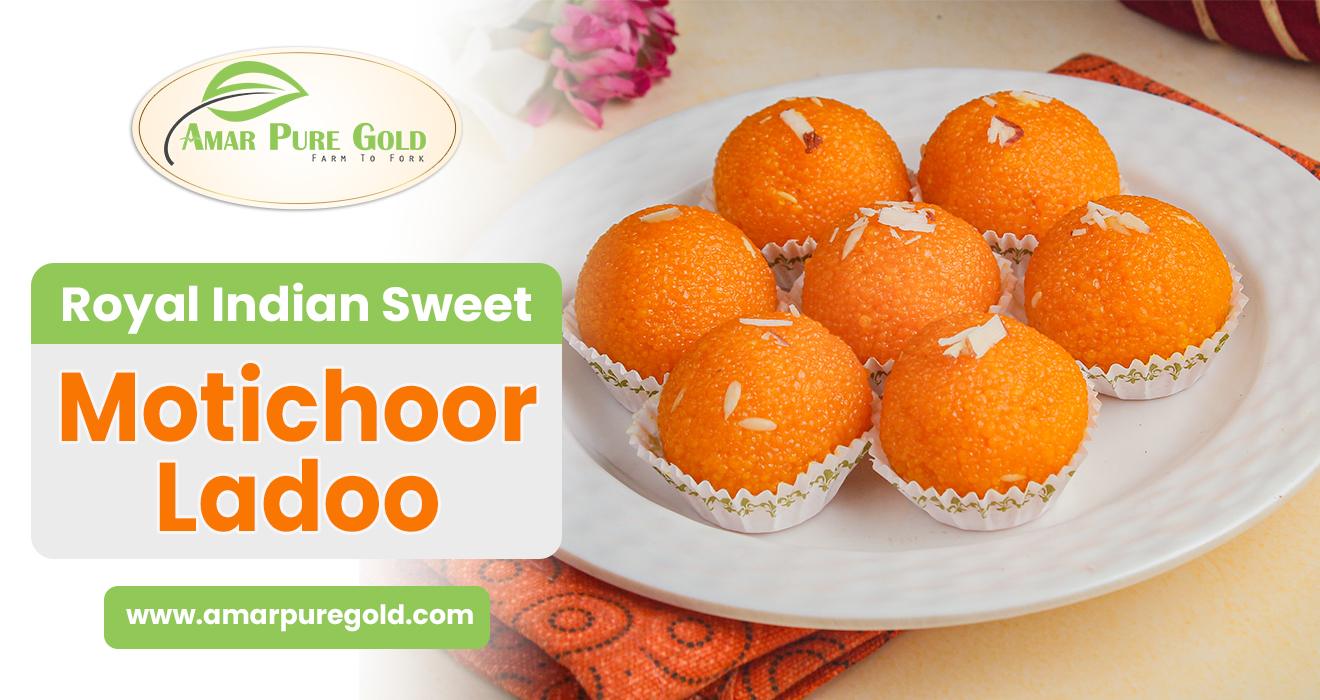
With the rise of the Indian diaspora, motichur laddu has gained popularity globally. It is now exported and enjoyed in countries like the USA, Canada, UK, and Australia.
Reasons for Global Popularity:
- Authentic Indian flavor
- Easy to serve and share
- Long shelf life (in packaged form)
- Cultural nostalgia for Indians abroad
Brands today are innovating with frozen and packaged motichoor laddus, ensuring consistent taste and quality across borders.
Motichoor Laddu in Modern Times
The sweet has evolved from traditional halwai shops to organized retail and global export markets.
Modern Trends:
- Hygienic, packaged sweets
- Vacuum-sealed and frozen variants
- Premium gifting boxes
- Online delivery via platforms like Zomato and Swiggy
This transformation has made motichoor laddu more accessible than ever before.
Buying Tips for Motichoor Laddu
To enjoy the best quality, keep these tips in mind:
- Look for bright but natural color (avoid artificial shades)
- Check for soft and moist texture
- Ensure it has a fresh aroma of ghee
- Prefer trusted sweet brands or hygienic packaging
Conclusion
Motichoor laddu, or motichur laddu, is much more than a sweet—it is a symbol of celebration, tradition, and togetherness. Its delicate texture, rich flavor, and cultural significance make it one of the most beloved Indian desserts.
From festive rituals to global exports, this humble laddu continues to win hearts across generations and geographies. Whether enjoyed fresh from a local sweet shop or delivered in premium packaging, the charm of motichoor laddu remains timeless.
In every bite lies a story of tradition, craftsmanship, and sweetness that truly melts in your heart.
Frequently Asked Questions (FAQs) – Motichur Laddu
1. What is Motichur laddu made of?
Motichur laddu is made from besan (gram flour), which is turned into very fine boondi (tiny fried droplets), then soaked in sugar syrup and shaped into laddus. It is flavored with cardamom, saffron, and ghee, and often garnished with dry fruits.
2. How many pieces are in 1 kg Motichur laddu?
Typically, 1 kg of motichur laddu contains around 20–25 pieces, depending on the size of each laddu. Smaller laddus may increase the count, while larger premium ones may reduce it to 15–18 pieces.
3. What is the difference between Motichur Laddu and Bundi Ke laddu?
The main difference lies in the size and texture of boondi:
- Motichur Laddu: Made with very fine boondi, giving a soft and melt-in-mouth texture
- Bundi Ke Laddu: Made with larger boondi, resulting in a grainy and slightly crunchy texture
Motichur laddu is generally considered more delicate and premium.
4. Is Motichur laddu made of besan?
Yes, motichur laddu is primarily made from besan (gram flour). The besan batter is used to create fine boondi, which forms the base of the sweet.
5. Is Motichur laddu healthy?
Motichur laddu can be enjoyed in moderation. It provides quick energy, some protein from besan, and healthy fats if made with ghee. However, due to its high sugar content, it should be consumed occasionally, especially by those managing weight or blood sugar.
6. How much sugar is in 1 Motichoor Ladoo?
On average, one motichoor laddu contains around 10–15 grams of sugar, depending on its size and recipe. The exact amount may vary based on sweetness level and preparation method.
7. In which state is Motichur Laddu famous?
Motichur laddu is widely popular across India, but it is especially famous in Uttar Pradesh and Rajasthan. It is also commonly prepared and offered in temples and celebrations throughout North India.